Schedule Change

A quick notice for y’all. The regular blog posts will be moved to Thursdays, fortnightly. The Jack Hansard episodes will still be updated Wednesdays, fortnightly.

I’ve been having trouble getting both sets of content finished for the same day, so this minor change should separate them a little and hopefully mean even better stuff in the blog posts.

On that note, Episode 5: Troll is already live and waiting for your perusal. Tomorrow’s Folklore Snippet will be on, you guessed it, trolls!

Folklore Snippets: Bluecaps and Cutty Soames

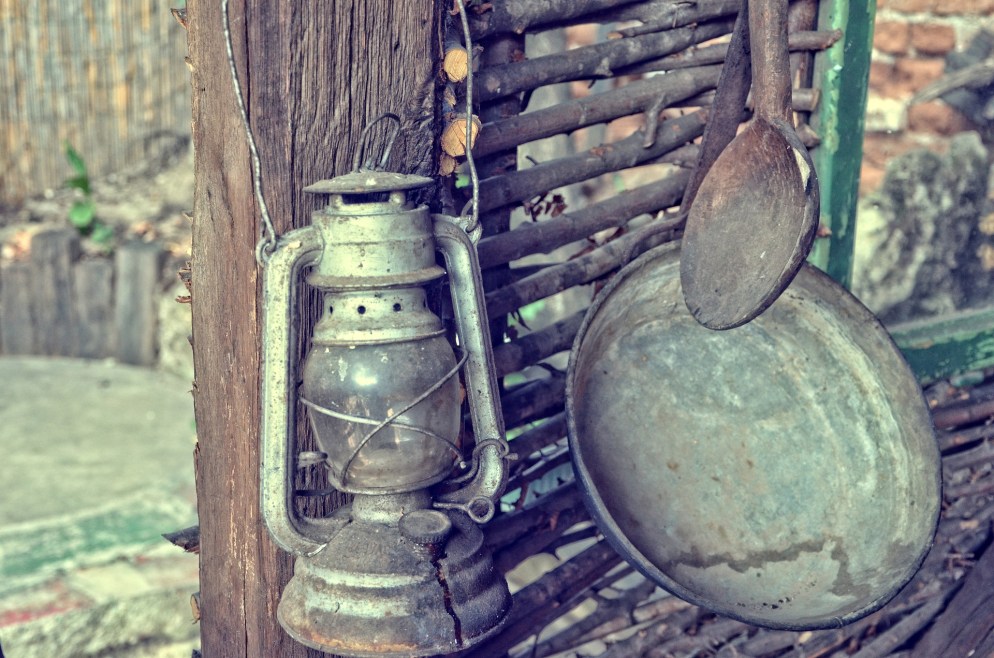
lantern via pixabay.jpg


Episode 4: Coal and Pies is now live. This week concludes the story of Hansard’s dealings with the reclusive Coblynau, featuring pies, coal, and a brush with death.

The newest creature Hansard encounters in this escapade is the mysterious Bluecap. Related to the Welsh Coblynau and Cornish Knockers, this creature also lives in mines. Unlike Knockers, it doesn’t have a humanoid appearance. The Bluecap is said to appear as a blue flame and might be a kind of ghost or fairy creature. Like the Knockers, Bluecaps seem to have honest, hard-working motives: some miners have claimed to see them transporting full tubs of coal about the mine – the job of a ‘putter’, in mining terms.

The Bluecap would also lead miners to rich deposits, so long as they were treated respectfully. It’s a recurring theme that insulting folkloric creatures will only result in mischief. But some of these creatures are more mischievous than others, like the mine-dwelling Cutty Soames. I’ve seen Cutty Soames referred to as an ‘elf’, so I think of him as a cousin to the Knockers. He is named for his most unhelpful habit, the cutting of the ropes (‘soames’) that connected the putter to the coal-tub. When I learned this I couldn’t help but name the treacherous character in Episode 4 after him, it fit so nicely.

Both the Bluecap and Cutty Soames are described in an article in the Colliery Guardian of May 13th, 1863. The writer describes them both as a type of goblin or elf, and of Cutty Soames says:

‘He rejoiced in the name of “Cutty Soams,” and appears to have amused himself by severing the rope-traces or soams, by which an assistant-putter, honoured by the title of “the fool “, is yoked to the tub. The strands of hemp which were left all sound in the board at “kenner-time,” were found next morning severed in twain. “Cutty Soams” has been at work, could the fool and his driver say, dolefully knotting the cord.’

About the Bluecap, we are told that it expects to be paid the same wages as a putter, once a fortnight. Allegedly the Bluecap will only take its due, no more nor less. Wages were left in a specific corner of the mine, and would disappear overnight. (Methinks a human miner came away a little richer from that transaction.)

It’s easy to see how a mine can be a rich environment for the evolution of mythic creatures. With no end of strange sounds, knocking, dripping, whistling, and a constant threat of danger – think sudden cave-ins and fire-damp explosions – it’s a smorgasbord of possibilities for ghosts and goblins to take the credit. I know if I was a miner, alone in the dark with only a mysterious knocking for company, I’d like to think that I simply had a non-human companion hard at work on just the other side of my seam. And if I escaped a collapse with just seconds to spare, I know I’d be putting out food or money to help keep the critters on my side. Danger breeds superstition, and we all feel safer with the thought that something might be looking out for us in those situations.

An addendum: Last time I ended with a section on Welsh words used by the Coblynau. I want to take a moment to talk about just one more: gwas.

When working out how the Coblyn Ang speaks, I wanted to give her a nickname she could call Hansard, something that fit snugly anywhere in a sentence. Ideally, something akin to the word ‘mate’ in English. An initial Google of the word told me that gwas might be a slang term for mate or boyo, and it sounded perfect. However, a more direct translation tells us that gwas actually means ‘servant’ or ‘lad’ in a similar sense.

After some thought I decided this fit nicely. Assuming that Coblynau slang might be different from modern Welsh anyway, a derogatory nickname with a servile meaning at its roots was perfectly suitable. Plus, it sounded snappy.

Am I over-thinking this? You betcha! But detail makes me happy.

Thanks for reading, folks. Here’s the further reading list if it floats your boat:

The Ghost World, by T. F. Thistleton

http://faeryfolklorist.blogspot.co.uk/2011/05/knockers-of-north.html

http://www.encyclopedia.com/doc/1G2-3403803089.html

http://www.netlibrary.net/articles/Bluecap

Folklore Snippets: Knockers, Knackers, and Welsh Insults

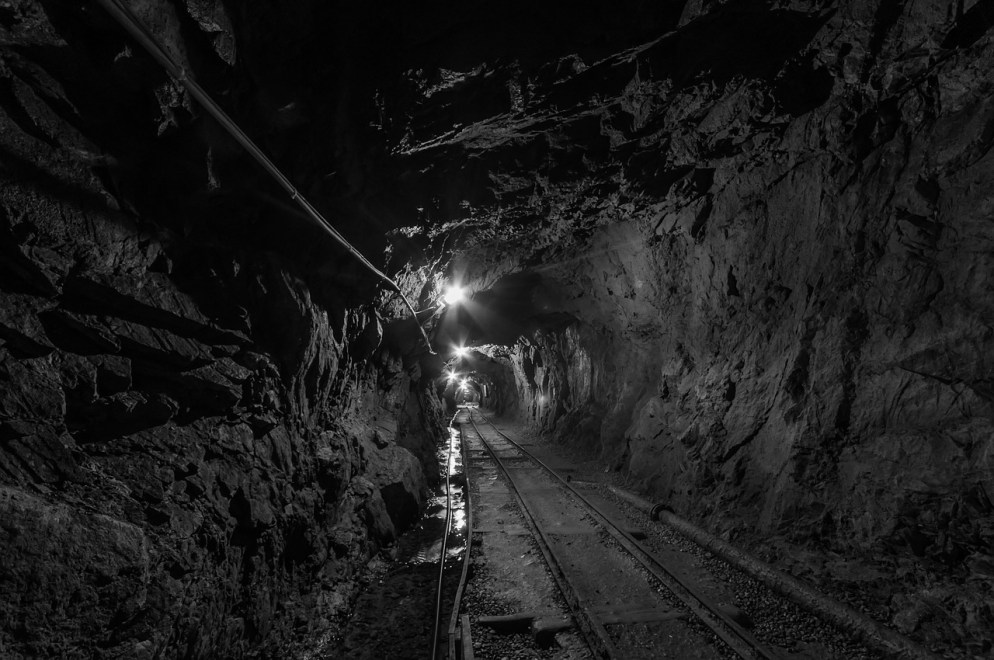
mine pixabay.jpg

The third instalment of the Jack Hansard short story series, Episode 3: Iron Bridge, is now up. This week Hansard finds himself in the idyllic Ironbridge Gorge famed for, you guessed it, its iron bridge. But the real curiosity is the strange species Hansard runs into on the other side of the bridge: Knockers, the subject of today’s folklore snippet.

I doubt Knockers are a particularly well-known creature of folklore. They are born of miners’ tales about the knocking and tapping sounds heard while working in the deep dark. As with most folklore, there are many versions of these creatures: some say they are the spirits of departed miners, while elsewhere they may be considered a separate species, like a goblin or a brownie. From what I’ve read, they seem to be particularly associated with the mines in Wales and Cornwall – easy to see how they could be found in Ironbridge, an area close to the Welsh border and rich in industrial heritage.

These creatures are just a couple of feet tall and wear the same clothing donned by miners. The knocking sounds in the mine were said to either be the sounds of the Knockers at work, or a warning to the miners that a collapse was imminent. Many a miner would claim to have escaped within an inch of his life due to the forewarning of the Knockers; in thanks, miners would leave some kind of food offering lying around (at the very least, the crust of their pasties was considered a tasty Knocker treat). However, the Knockers were also to be blamed for missing tools and other mischief, especially if you were careless enough to insult them.

‘Knacker’ is another word for Knocker, and probably comes from an association of the creatures with the ‘knacking’ (abandonment) of a mine. A story I find incredibly sweet is the 1956 case of a sealed mine in California where a group of Cornish-descended miners petitioned the mining company to have the knockers ‘released’ so they could move on to other mines – the company agreed. Californian Knockers are known as Tommyknockers, and travelled over with the migrating Cornish miners, themselves known as ‘Cousin Jacks’.

As Hansard discovers, a Coblyn (plural: Coblynau) is a Welsh version of the Cornish Knocker. Sounds a lot like ‘goblin’, don’t it? Again known for the knocking sounds they make, they are considered good friends of the miner and generally harmless unless provoked. An intriguing quirk to the personality of this strain of Knocker is that they may be often found hard at work, but it is work they never seem to complete. This rather amused me when considering the current state of the Ironbridge Gorge: the area suffers from landslides and a shifting of the riverbanks. In particular, the famous Iron Bridge is buckling under the strain – I rather like the idea that the Knockers are behind all of this.

Now, with the Coblynau that we meet in Episode 3, we get some choice picks of the Welsh language, so consider this a bonus section! I am not in any way fluent in Welsh, but I wanted to put some time and effort into giving my version of the Coblynau an authentic identity. (Their accent isn’t like modern Welsh by the way, before you start nitpicking my portrayal of their speech :P) So for those who may be wondering, here’s the glossary of Welsh terms seen in Episode 3:

igam ogam = zigzag, used colloquially like ‘the way you walk when drunk’

mwnci = monkey (pronounced ‘mun-ki’)

pen pigyn = dickhead

pentwp = stupid head (pronounced ‘pen-tup’)

twpsyn = idiot (pronounced ‘tup-sin’)

And finally, ‘go and scratch’ is a literal translation of the Welsh insult meaning ‘piss off’. (Oh, and an ‘oggie’ is a traditional welsh pasty.)

I hope you enjoyed that, and if you have any other lovely Welsh words you’d like to offer, then please do! (popty ping!) Furthermore, if you have any feedback you’d like to share on the Hansard series, it is more than welcome. Constructive criticism especially. Take care now~

If you wish to indulge in further reading:

Knockers
http://www.cornish-connexions.co.uk/cornwall/cornish-culture/myths-and-legends/cornish-folklore.html
http://www.edcgov.us/Living.aspx?id=15039
http://www.mysteriousbritain.co.uk/england/cornwall/folklore/the-knockers.html

Coblynau
http://www.sacred-texts.com/neu/celt/wfl/wfl02.htm
http://www.mysteriousbritain.co.uk/wales/folklore/the-coblynau.html

The results of the Knockers’ work in Ironbridge
http://www.ironbridge.org.uk/collections/the-iron-bridge/conservation-and-restoration/

Folklore Snippets: Sweet Dreams

dream catcher pixabay.jpg

Episode 2 of the Jack Hansard short story series can be found here. This week, Hansard gets into the dream-making business with a stash of captive dreams he doesn’t quite know how to handle. I’m a big fan of giving abstract concepts physical manifestations. In Episode 1 we saw the result of Hansard’s endeavours selling inspiration as a valuable commodity; now he deals with dreams as real as living creatures and meets a character out of folklore – the Sandman. This Sandman is no mythic entity, however. In Hansard’s reality, ‘Sandman’ is just the title given to a speciality tradesman of dreams.

***

I wasn’t quite sure what to be writing in this blog. It’s a sideline to the short story gig – comments and musings rather than hard-hitting articles about the state of the world today. I can’t say that sounds overly interesting though, so I’ve decided to try something mildly structured. Hansard’s (mis)adventures commonly encounter things drawn from myth and folklore, so with each episode I’ll pick out a related topic and give you a very brief overview. Ya’know just the interesting bits. So to go with Episode 2, here’s a quick look-see at some of the stories behind the Sandman.

I think the folkloric Sandman is probably the most well-known character (in Europe, at least) associated with dreams. He is said to sprinkle dust or sand into children’s eyes to make them sleep and dream; if you wake with that gritty gunk in your eyes then you know he’s visited. Hans Christian Anderson’s 1841 tale Ole Lukøje paints the Sandman as a benevolent figure whose innocent desire is to tell children stories while they sleep. After sending them to sleep with his sand, he places one of two umbrellas over the child’s head: one with pretty pictures to bring on nice dreams for the good boys and girls; one with no pictures to deny any dreams to the naughty.

Near the end of this tale Ole Lukøje identifies himself as being called the ‘god of dreams’ by the Greeks and Romans. This god of dreams was Morpheus, who appears in Ovid’s poem Metamorphoses. Ovid tells us he is the son of Somnus (Hypnos is the Greek equivalent), the god of sleep. From Greek mythology, Hypnos is the brother of Death (‘Thanatos’); in Hans Christian Andersan’s story, Ole Lukøje tells us his brother is Death – perhaps he mixed up the two ancient deities, but the whole thing does suggest that maybe the modern Sandman has his roots in Greco-Roman tradition.

Hans wasn’t the first to write about the Sandman. In 1817 E. T. A. Hoffmann wrote Der Sandmann, a grim short story where the protagonist associates the character of the Sandman with a sinister figure from his childhood. In this story we are given a wholly opposite view of the Sandman and his intentions:

‘He is a wicked man, who comes to children when they won’t go to bed, and throws a handful of sand into their eyes, so that they start out bleeding from their heads. He puts their eyes in a bag and carries them to the crescent moon to feed his own children, who sit in the nest up there. They have crooked beaks like owls so that they can pick up the eyes of naughty human children.’ (Translation by John Oxenford.)

Yikes. Gruesome.

The Sandman still pops up in modern culture, and isn’t confined to the realm of children’s stories. The first thing that springs to my mind when I hear the word ‘Sandman’ is the Metallica song, Enter Sandman. In 2012 the animated Dreamworks film Rise of the Guardians featured the Sandman as a powerful and benevolent protector of children. Anyone familiar with the work of Neil Gaiman or the world of comic books is likely to have heard of the dark fantasy graphic novel series also named after the character (highly recommended).

I love seeing the different ways bits of old folklore have been re-invented to find new places in our modern world. To see old ideas turned on their head or given a new definition entirely: this is the way we own our past and continue traditions, allowing them to evolve along with our culture.

Hope you enjoyed this little info snippet. Episode 3 will be online on Wednesday 11th February. Thanks for reading!

(Edited 11/02/15 to include ‘Folklore Snippets’ series title.)

We have lift off!

You know, I wasn’t entirely expecting to reach this point. Sure, I’ve been planning An Inspired Mess for months now. I’ve felt the excitement building, the anticipation, the impatience of not being able to do everything immediately. Finally, I’m going to take that big, scary step.

Before we continue, I should first point out that Episode 1 of the Jack Hansard series can be found here. If you are one of the small but wonderful group of people who has been following me through Facebook, I’m sincerely grateful you stuck around to see the launch of the site. I hope it does not disappoint.

If you aren’t in the know, ‘Jack Hansard’ is my short story series about the eponymous Mr Hansard and his strange misadventures navigating the underworld of the occult Black Market. Each episode is just that, an episode out of Hansard’s odd life.

Once a fortnight, on Wednesdays, I will upload a new Hansard episode. At the same time I’ll write a short blog post to accompany it. A blog about what? Nothing in particular, currently. Maybe some interesting snippet of mythology relating to the week’s episode, maybe some writing-related insights. The blog isn’t really the important bit; it’s more of an excuse to have a conversation with you. The important bit is the selection of short stories here and, hopefully, your enjoyment of them.

What actually is An Inspired Mess?

For me: a kick up the arse. For you: a free short story series, delivered fortnightly. And, maybe, some other bits and bobs along the way.

The title of the website is an obvious nod to the first Jack Hansard episode of the same name. But it is also a fairly apt description of myself. I am a mess of half-spun tales, fleeting ideas and almost-thoughts.

I seem to be inspired by everything. I want to write everything. Just as a random spark will ignite a creative fire for a gritty dystopian sci-fi, I simultaneously yearn to write high fantasy. And comic fantasy, and urban fantasy, and space fantasy because how cool is that. I have an urge to write dark, disturbing horror, and light, lifting humour – usually both at once.

Jack Hansard is just one of these passing ideas I’ve managed to pluck out of the mess, disentangle from the noise and create something coherent out of. It’s a bit of an experiment. In reality, what I really wanted to do was make a webcomic. But I don’t have the artsy skill for this; I’m more of a wordy person. It occurred to me that you must be able to create something a little similar to a webcomic, but in text form. Obviously, there are big differences between the two, each with their own set of limitations, but why not have a go at writing a sort of episodic series of short stories?

There is an ulterior motive, of course. There always is; nothing comes for free. And the ulterior motive behind An Inspired Mess is . . . an exercise in overcoming stage fright.

I suffer, as I’m sure many other writers suffer, from that nasty little bug of self-doubt. That venomous voice that viciously likes to whisper: ‘What if, at the end of the day, you’re just shit?’

It’s the voice that prevents us from showing off our work, and benefiting from both the praise and the criticism it engenders. Both are necessary for growth, and I’ve come to feel a deep, pressing urge for growth. Currently, I am so shy about my writing that my behaviour is frankly embarrassing. Recently, a friend saw me hastily jotting down some plot notes while I was staying over. When they asked about it, I cagily mumbled that I was doodling and hid it in my bag. Who gets that embarrassed over writing notes?

I once tried to announce through Facebook that I’d had some success in a writing competition, but I phrased it in such a self-deprecating way (‘I doubt if anyone would be interested…’) that afterwards I felt it sounded like the kind of attention-seeking posts I abhor. I can’t help but dwell on the egotistical nature of talking about something you’ve created – despite my immense excitement for An Inspired Mess, the conceited nature of self-promotion makes me deeply uneasy.

I would be the first to tell you that I’m not a great writer. But sometimes I go a little too far in that direction and forget to acknowledge that I am not a bad writer, either. Having had moderate success in a couple of short story competitions should prove to me, if no-one else, that I’m not bad. And by being not bad I’ve managed to make a few people smile, and hopefully improved someone’s day.

I need to keep reminding myself of this, that the whole purpose of writing is to bring enjoyment to others, and how the hell am I going to achieve that if I don’t actually let anyone read the stuff?

So that’s what this really is.

An endeavour to let go. To release these nuggets of creation into the world, for better or worse, and to learn to embrace the prospect of an audience. An endeavour to improve and grow, to entertain for both the sake of entertaining and to become a better entertainer.

If I can amuse just a few people, raise just a handful of smiles once a fortnight, then this endeavour will have been worthwhile. Even if I don’t – if I end up with just an inbox full of criticism – it will still be worthwhile. My mind will be sharper and my skin thicker for it.

So finally, I would like to invite you to join me as I take this first big step. As we plunge into a world of the bizarre and sometimes downright surreal, I hope, for a few brief moments, I can entertain you.