The third instalment of the Jack Hansard short story series, Episode 3: Iron Bridge, is now up. This week Hansard finds himself in the idyllic Ironbridge Gorge famed for, you guessed it, its iron bridge. But the real curiosity is the strange species Hansard runs into on the other side of the bridge: Knockers, the subject of today’s folklore snippet.
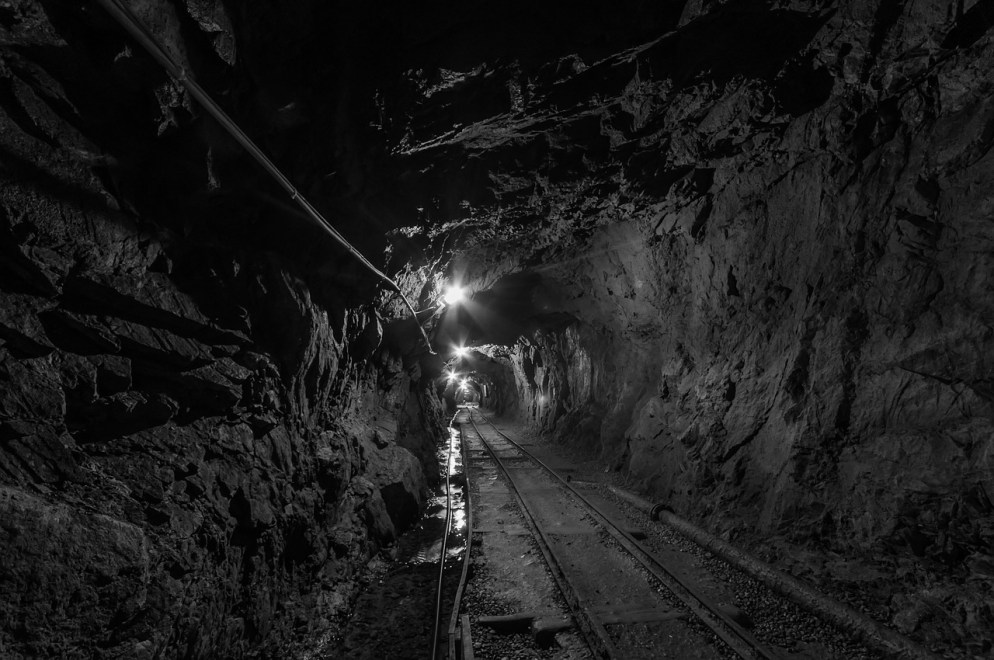
I doubt Knockers are a particularly well-known creature of folklore. They are born of miners’ tales about the knocking and tapping sounds heard while working in the deep dark. As with most folklore, there are many versions of these creatures: some say they are the spirits of departed miners, while elsewhere they may be considered a separate species, like a goblin or a brownie. From what I’ve read, they seem to be particularly associated with the mines in Wales and Cornwall – easy to see how they could be found in Ironbridge, an area close to the Welsh border and rich in industrial heritage.
These creatures are just a couple of feet tall and wear the same clothing donned by miners. The knocking sounds in the mine were said to either be the sounds of the Knockers at work, or a warning to the miners that a collapse was imminent. Many a miner would claim to have escaped within an inch of his life due to the forewarning of the Knockers; in thanks, miners would leave some kind of food offering lying around (at the very least, the crust of their pasties was considered a tasty Knocker treat). However, the Knockers were also to be blamed for missing tools and other mischief, especially if you were careless enough to insult them.
‘Knacker’ is another word for Knocker, and probably comes from an association of the creatures with the ‘knacking’ (abandonment) of a mine. A story I find incredibly sweet is the 1956 case of a sealed mine in California where a group of Cornish-descended miners petitioned the mining company to have the knockers ‘released’ so they could move on to other mines – the company agreed. Californian Knockers are known as Tommyknockers, and travelled over with the migrating Cornish miners, themselves known as ‘Cousin Jacks’.
As Hansard discovers, a Coblyn (plural: Coblynau) is a Welsh version of the Cornish Knocker. Sounds a lot like ‘goblin’, don’t it? Again known for the knocking sounds they make, they are considered good friends of the miner and generally harmless unless provoked. An intriguing quirk to the personality of this strain of Knocker is that they may be often found hard at work, but it is work they never seem to complete. This rather amused me when considering the current state of the Ironbridge Gorge: the area suffers from landslides and a shifting of the riverbanks. In particular, the famous Iron Bridge is buckling under the strain – I rather like the idea that the Knockers are behind all of this.
Now, with the Coblynau that we meet in Episode 3, we get some choice picks of the Welsh language, so consider this a bonus section! I am not in any way fluent in Welsh, but I wanted to put some time and effort into giving my version of the Coblynau an authentic identity. (Their accent isn’t like modern Welsh by the way, before you start nitpicking my portrayal of their speech :P) So for those who may be wondering, here’s the glossary of Welsh terms seen in Episode 3:
igam ogam = zigzag, used colloquially like ‘the way you walk when drunk’
mwnci = monkey (pronounced ‘mun-ki’)
pen pigyn = dickhead
pentwp = stupid head (pronounced ‘pen-tup’)
twpsyn = idiot (pronounced ‘tup-sin’)
And finally, ‘go and scratch’ is a literal translation of the Welsh insult meaning ‘piss off’. (Oh, and an ‘oggie’ is a traditional welsh pasty.)
I hope you enjoyed that, and if you have any other lovely Welsh words you’d like to offer, then please do! (popty ping!) Furthermore, if you have any feedback you’d like to share on the Hansard series, it is more than welcome. Constructive criticism especially. Take care now~
If you wish to indulge in further reading:
Knockers
http://www.cornish-connexions.co.uk/cornwall/cornish-culture/myths-and-legends/cornish-folklore.html
http://www.edcgov.us/Living.aspx?id=15039
http://www.mysteriousbritain.co.uk/england/cornwall/folklore/the-knockers.html
Coblynau
http://www.sacred-texts.com/neu/celt/wfl/wfl02.htm
http://www.mysteriousbritain.co.uk/wales/folklore/the-coblynau.html
The results of the Knockers’ work in Ironbridge
http://www.ironbridge.org.uk/collections/the-iron-bridge/conservation-and-restoration/

 Georgina Jeffery